Buying Land in St. John, USVI: What to Check Before You Build
Buying land in St. John can be the first step toward creating a truly personal Caribbean home. It can also offer an entry point into the St. John real estate market for buyers who have not found an existing villa that matches their location, layout, or budget.
But vacant land on St. John should never be evaluated by acreage and ocean view alone. Two parcels with similar sizes and asking prices can have very different development potential once you consider legal access, slope, excavation, drainage, utilities, permitting, and construction logistics.
If you are searching for land for sale in St. John, USVI, this guide will help you identify the questions that matter before you make an offer.
1. Confirm legal and practical access
The first question is not simply whether a road appears to reach the property. You need to understand whether the parcel has a recorded legal right of access and whether that access is practical for construction and daily use.
Ask your attorney, surveyor, and real estate agent to help confirm:
- Whether access is public, private, or provided by a recorded easement
- Where the right-of-way lies in relation to the parcel boundaries
- Whether the existing road follows the recorded access
- Who maintains the road and how expenses are shared
- Whether road agreements or homeowners’ association rules apply
- Whether trucks, concrete deliveries, cranes, and emergency vehicles can reasonably reach the site
On a hillside island, a narrow turn, steep grade, or unbuilt right-of-way can materially affect the feasibility and cost of development. A parcel may have legal access on paper while still requiring substantial work to become construction-ready.
2. Review the survey, boundaries, and topography
A boundary survey helps establish what you are buying. A topographic survey helps your architect and engineer understand how the land may be developed.
Before closing, determine whether the available survey is current and whether the property corners or boundary markers can be identified. Review the documents for encroachments, overlaps, road discrepancies, easements, and any difference between the mapped parcel and conditions on the ground.
For sloped land, topography is especially important. It influences:
- The location and orientation of the home
- Driveway design and parking
- Excavation and retaining walls
- Foundation engineering
- Drainage and erosion control
- Cistern and septic placement
- The amount of usable outdoor space
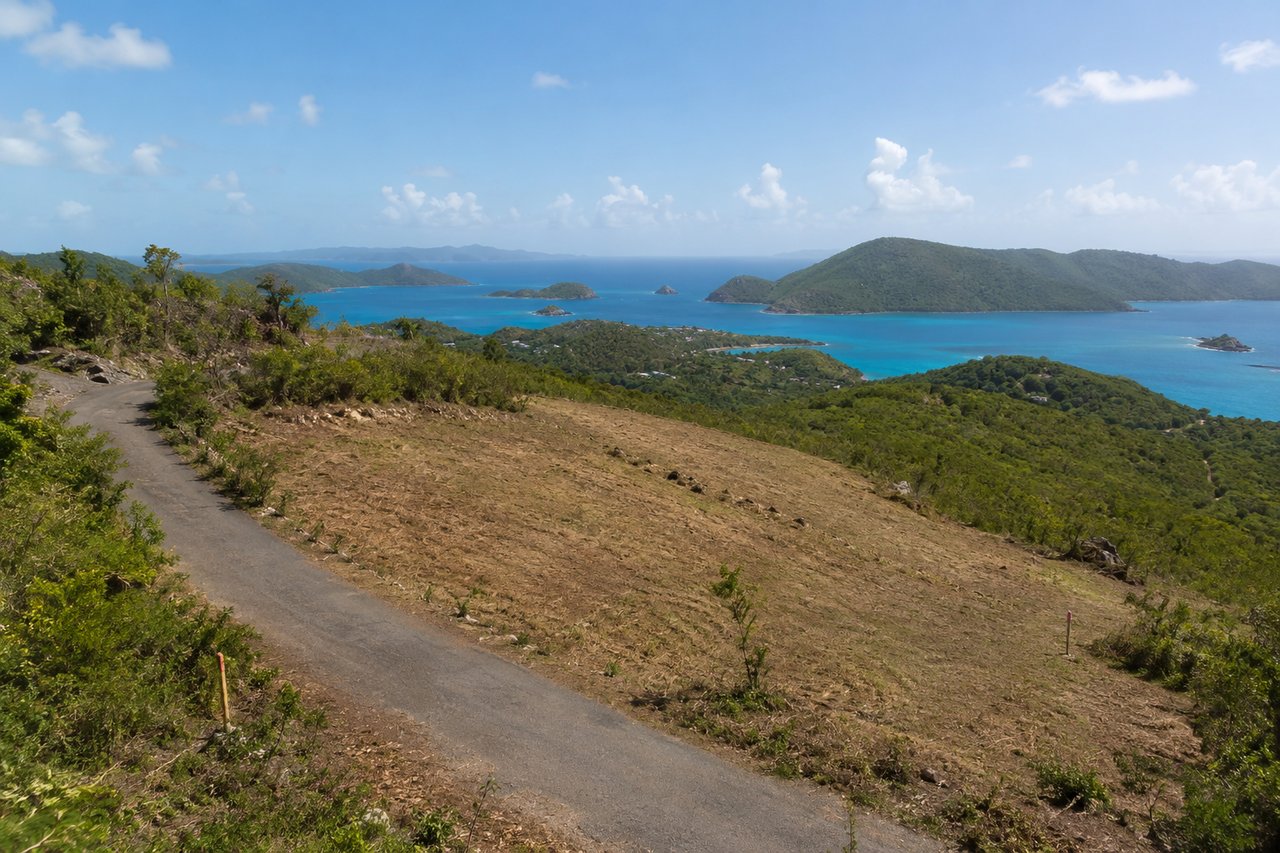
A steep parcel is not necessarily a bad parcel. Many of St. John’s most dramatic views come from hillside sites. The key is understanding how the slope affects the design and total project—not discovering it after closing.
3. Verify zoning and permitted uses
Do not assume that neighboring development guarantees you can build the same type or size of structure on the parcel you are considering.
Zoning can affect permitted uses, density, setbacks, building height, lot coverage, parking, and other design requirements. Restrictive covenants, subdivision documents, or homeowners’ association rules may impose additional limitations beyond territorial zoning.
Before you finalize a purchase, confirm the parcel’s current zoning and discuss your intended use with the appropriate professionals and the U.S. Virgin Islands Department of Planning and Natural Resources. If you plan to build multiple units, operate a vacation rental, create separate living quarters, or pursue a commercial use, raise that early.
The safest approach is to make your offer subject to a due-diligence period that gives your team enough time to investigate whether the parcel supports your intended project.
4. Understand coastal, environmental, and permitting considerations
Depending on location and scope, a project may require building, electrical, plumbing, mechanical, flood, occupancy, or Coastal Zone Management review and approvals. The USVI Department of Planning and Natural Resources regulates building permits and code compliance, while Coastal Zone Management evaluates proposed development within the territory’s applicable coastal zone.
Development planning may also need to account for:
- Flood-zone conditions
- Stormwater runoff and erosion control
- Septic design and soil conditions
- Shoreline or coastal-resource considerations
- Historic or archaeological review
- Vegetation clearing and site disturbance
- Special wind and structural design requirements
Permit requirements can change and differ by property. An architect or engineer familiar with St. John should review the parcel and intended design before you rely on a proposed development concept.
5. Investigate power, water, septic, and communications
Utility planning is a major part of buying buildable land in St. John.
Electricity
Confirm the location of the nearest electrical infrastructure and ask what may be required to serve the property. Distance, terrain, easements, pole placement, trenching, and transformer needs can all affect the plan. Many owners also consider solar, battery storage, and generator backup from the beginning rather than treating resilience as a later upgrade.
Water and cisterns
St. John homes commonly rely on rainwater collected from the roof and stored in a cistern. The house design therefore needs to coordinate roof catchment, storage capacity, filtration, pumps, overflow, and access for water delivery when rainfall is insufficient.
Wastewater
Verify how wastewater can be handled on the site. The location and design of a septic system must work with the home, cistern, driveway, setbacks, slope, and soil conditions.
Internet and cellular service
Coverage can vary by neighborhood and even by the side of a hill. If reliable connectivity is essential for remote work or vacation-rental operations, test service at the property rather than assuming nearby homes have the same signal.
6. Evaluate excavation and construction access
The cost of the structure is only one part of a St. John building project. Site preparation can be a major variable.
Ask a local contractor or engineer to consider:
- Excavation and rock removal
- Retaining walls and slope stabilization
- Driveway grade, width, and turning radius
- Equipment staging and material storage
- Concrete access and pumping distance
- Drainage during and after construction
- Neighboring structures and road disruption
- Barge, trucking, and delivery logistics
A lower-priced parcel that requires extensive road work, excavation, and retaining walls may ultimately cost more to develop than a higher-priced lot with easier access and a more favorable building envelope.
7. Study orientation, views, wind, sun, and privacy
The best homes on St. John respond to their setting. When walking a parcel, look beyond the view in front of you and consider how the site feels throughout the day.
Evaluate:
- Sunrise or sunset orientation
- Exposure to prevailing trade winds
- Seasonal sun angles and heat gain
- Rain direction and weather exposure
- Existing vegetation and future view growth
- Privacy from roads and neighboring homes
- Potential obstruction from development on nearby parcels
An architect can often position a home to improve ventilation, shade, privacy, and outdoor living while reducing unnecessary site disturbance.
8. Build a realistic total-project budget
When comparing St. John land for sale, do not stop at the purchase price. Your preliminary budget should account for the full path from acquisition to occupancy, including:
- Buyer closing costs
- Surveying and title work
- Architectural and engineering services
- Permit and review fees
- Site clearing and excavation
- Driveway, parking, and retaining walls
- Cistern and wastewater systems
- Utility connections and backup power
- Shipping and material handling
- Construction insurance
- Landscaping and exterior work
- Furnishings, appliances, and window treatments
- A contingency for island logistics and unforeseen site conditions
Before purchasing, obtain parcel-specific input from qualified local professionals. Generic per-square-foot estimates can be misleading when site work and access differ so widely.
9. Review title, easements, covenants, and financing early
Your attorney or title professional should review ownership, liens, easements, restrictions, and other recorded matters affecting the parcel. If you intend to finance the purchase or construction, speak with lenders early. Vacant-land and construction financing may involve different down-payment, appraisal, insurance, draw, and completion requirements than financing an existing home.
If your goal is to operate the completed property as a short-term rental, include a rental and property-management review in your planning. Design decisions such as parking, bedroom privacy, backup power, owner storage, pool access, and maintenance areas can have a meaningful impact on future guest experience and operating efficiency.
10. Assemble the right local team before you commit
The most productive time to involve local professionals is before the due-diligence period expires. Depending on the parcel and your plans, your team may include:
- A St. John real estate agent
- A USVI real estate attorney or title professional
- A licensed surveyor
- An architect familiar with island design
- Civil and structural engineers
- A local builder or general contractor
- Insurance and lending professionals
The goal is not to fully design the home before buying the land. It is to identify major constraints, understand the likely development path, and make an informed decision.
Questions to ask before buying land in St. John
Use this checklist when comparing parcels:
- Is legal access recorded, and is the physical access usable?
- Are the parcel boundaries clearly established?
- Is a recent boundary or topographic survey available?
- What is the current zoning, and does it support my intended use?
- Are there covenants, HOA rules, or shared-road obligations?
- What permits and professional reviews may be required?
- How will the site receive power, water, wastewater service, and internet?
- What excavation, retaining, drainage, and driveway work is likely?
- Can construction equipment and material deliveries reach the site?
- Has a local architect, engineer, or contractor reviewed the parcel?
- Does my total budget include site work, professional fees, utilities, and contingency?
- Does the purchase contract provide enough time for meaningful due diligence?
Is buying land in St. John right for you?
Buying land may be a strong fit if you value design flexibility, can accommodate a longer timeline, and are prepared to manage the decisions involved in island construction. An existing home may be better if you want immediate use, clearer upfront costs, or an established rental history.
Neither option is automatically better. The right choice depends on your goals, budget, timeline, and appetite for development.
As a St. John Realtor with experience across Coral Bay, Carolina, Hansen Bay, East End, Cruz Bay, Chocolate Hole, Rendezvous, Ditleff, and Peter Bay, I help buyers compare parcels based on more than the view. I can help you investigate access, connect with local professionals, evaluate comparable sales, and identify the questions to answer before you move forward.
If you are considering buying land in St. John, USVI, contact Dwight Lascaris to discuss available parcels or arrange an in-person or virtual property tour.
Frequently asked questions
Can U.S. citizens buy land in St. John, USVI?
Yes. St. John is part of the U.S. Virgin Islands, and U.S. citizens can purchase real estate there. Buyers should still use qualified local professionals to complete title, contract, survey, and development due diligence.
Is every parcel of land in St. John buildable?
No. Buildability depends on factors such as legal access, zoning, setbacks, slope, survey conditions, easements, utilities, wastewater design, environmental review, and permitting. Each parcel should be evaluated individually.
Do I need a survey before buying land in St. John?
A survey is an important part of land due diligence. The appropriate survey depends on the parcel and the questions that need to be answered. Buyers should discuss boundary and topographic survey needs with their attorney, surveyor, architect, lender, and agent.
Can I finance vacant land in the USVI?
Financing may be available, but vacant-land and construction loans can have different requirements from a conventional home mortgage. Speak with lenders early to understand down payment, appraisal, construction plans, insurance, and draw requirements.
How long does it take to build a home in St. John?
The timeline varies based on design, professional reviews, permits, contractor availability, site preparation, material procurement, weather, and project complexity. Buyers should seek a parcel-specific timeline from local design and construction professionals.
What is the biggest mistake buyers make when choosing St. John land?
One of the biggest mistakes is focusing on acreage, price, and view without fully evaluating access, slope, utilities, site work, and restrictions. A lower purchase price does not always mean a lower total development cost.